
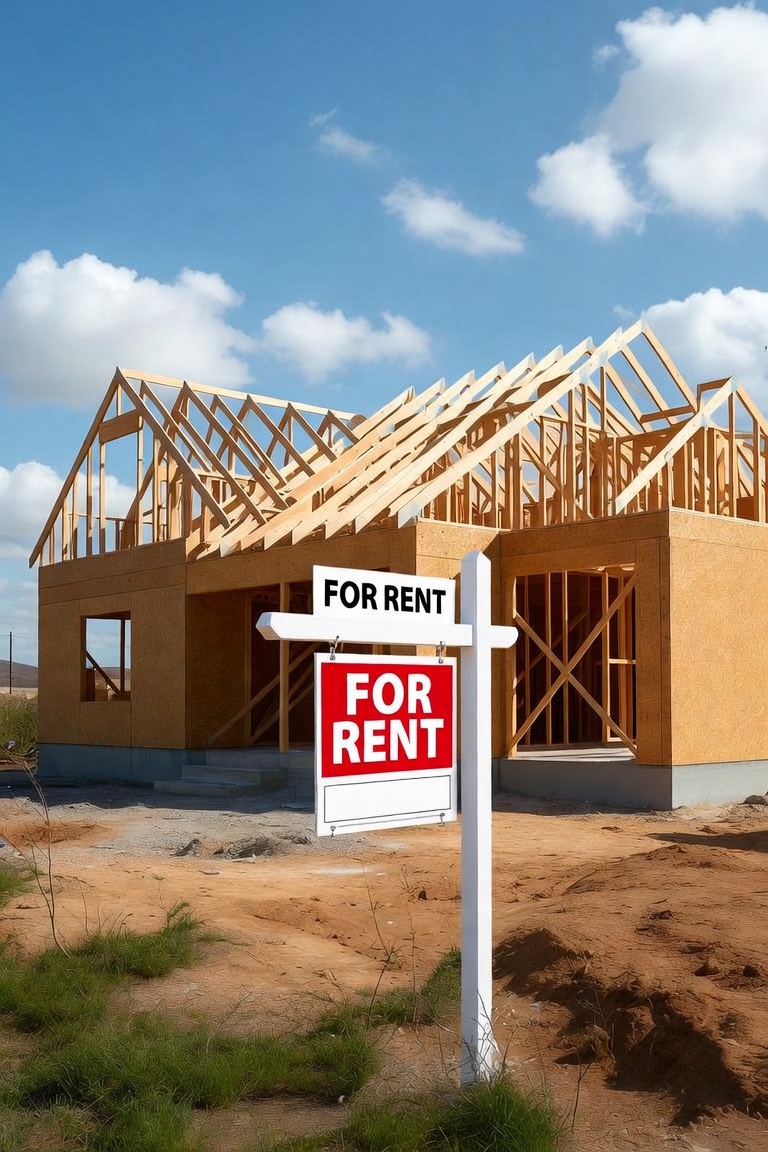
Every person who arrives in a country needs somewhere to sleep tonight. Not next year, not when the new apartment complex is finished. Tonight.
That is the part of the immigration debate that economists find least controversial, and politicians find most uncomfortable. Housing is a market like any other. Add buyers and renters faster than you add homes, and prices rise.
Between 2021 and 2024, the United States added people at a pace it had not seen in generations. The Congressional Budget Office estimates that net unauthorized immigration alone added roughly 7 million people over that period, before slowing sharply in mid-2024. Seven million people is about the population of Massachusetts. They needed roughly the housing of a large state, and they needed it immediately.
A working paper from the Federal Reserve Bank of Dallas, circulated this summer, followed that demand into local markets using immigration court records and government data. The pattern was consistent. Where unauthorized workers arrived, prices moved. A one percent increase in those workers relative to the local workforce went with roughly a 2.2 percent rise in home prices and a 1.4 percent rise in rents. In the average metro area, the inflows accounted for about 30 percent of home price growth and about 20 percent of rent growth over the period.
The researchers described the inflows plainly as a housing demand shock. Demand arrived in a few years. Construction did not respond on anything like that timetable, and the steepest increases came in places where housing was already tight.
A study from the Center for Immigration Studies, a group that favors lower immigration, reached a higher estimate: as much as 40 percent of the real rise in rents between 2013 and 2022, once spillovers between neighboring areas are counted. Both studies find the same direction. They differ on size.
The demand does not stop at the front door. Newcomers spend most of what they earn, as a second Dallas Fed study noted, on groceries, cars, phones and furniture. That spending supports local businesses, and it is one reason the same researchers concluded that the surge barely moved overall inflation: immigrants added demand for goods, but they also added the workers who produce them, and the two roughly offset. Housing is different, because a house cannot be produced in a few months the way a meal or a phone can.
There is a tempting objection. By the Brookings Institution's estimate, more people left the United States than arrived in 2025, for the first time in at least half a century. Yet national asking rents rose 1.5 percent in the year to September. If immigration drives rent, why did rents not fall?
The answer is in the arithmetic. Brookings put last year's net outflow at somewhere between 10,000 and 295,000 people. Set that against the roughly 7 million who arrived in the preceding three years. The people who came during the surge are still here, still renting, still competing for the same apartments. A closed door stops new demand. It does not remove the demand that has already walked through.
On wages, the evidence is narrower than the bumper sticker suggests. The National Academies of Sciences, in the most thorough review to date, found that immigration has little long-run effect on the overall wages of native-born workers. The pressure falls on earlier immigrants and, in some studies, on native-born workers without a high school diploma. The Dallas Fed paper found no evidence that average local wages fell. For those at the bottom of the ladder, the competition is real. For the typical paycheck, it is not where the money is going.
The money is going to rent.
None of this requires any judgment about immigrants as people. It is a question of how many people a housing market can absorb, and how fast. For three years, the country added demand at a rate its housing stock could not match, and the bill arrived in the form of higher rent. Building more homes would help, and builders note that immigrants make up a quarter of their workforce. But the first lesson of the surge is about demand: a country that admits people faster than it can house them should expect to pay for it, and the people who pay first are those already renting.

Leave a Comment