
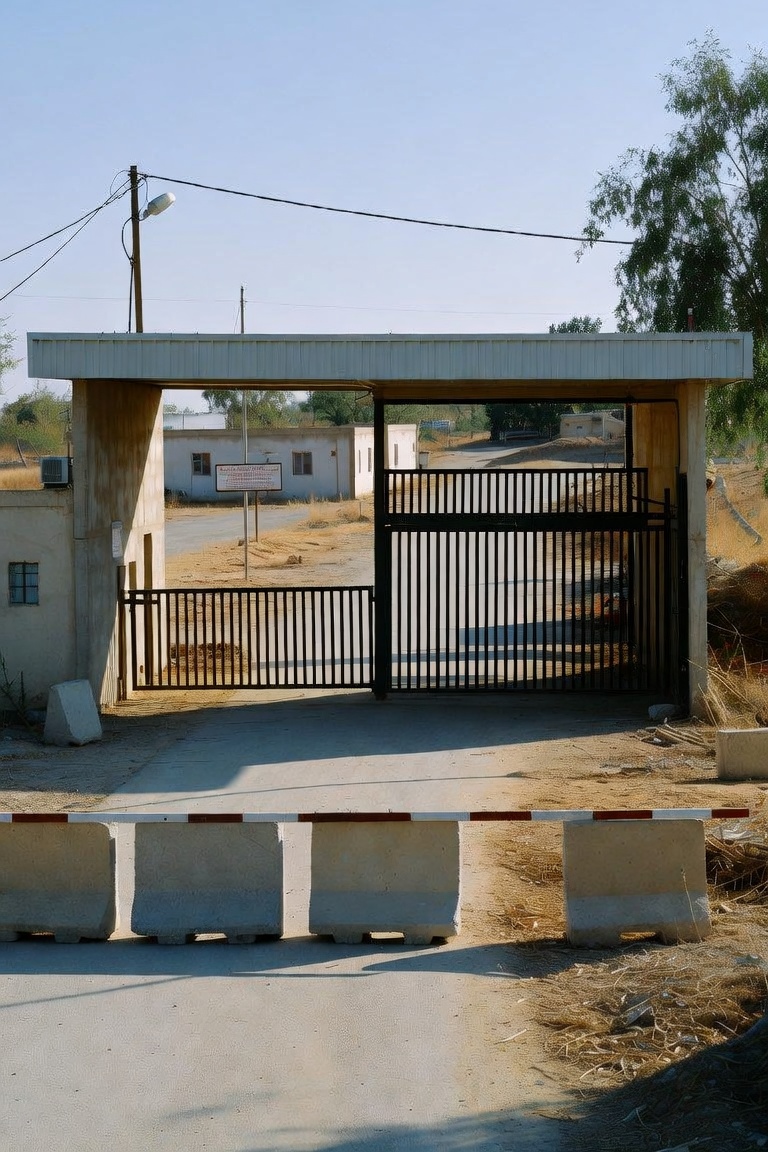
It is one of the most repeated questions about the war in Gaza. If Arab governments care so much about the Palestinians, why will none of them take the refugees?
The question rests on a mistake. Arab countries have been taking Palestinian refugees for three-quarters of a century. Jordan alone hosts more than two million registered Palestine refugees, and most of them hold full Jordanian citizenship. Lebanon has registered nearly half a million, although the number actually living there today is closer to a quarter of a million. Syria took hundreds of thousands more.
So the real question is narrower and more revealing. Why do the countries with the longest experience of hosting Palestinians refuse, so firmly, to take the people of Gaza now?
When President Trump proposed in early 2025 that Gaza's population be moved to Egypt and Jordan, both governments said no within days. They said it again this year, as the Rafah crossing partially reopened. Their reasons fall into three categories, and all three come from experience.
The first is the fear of permanence. In 1948, around 700,000 Palestinians fled or were driven from their homes during the war that created Israel. They expected to go home within months. They never did, and neither did their children or grandchildren. Most of the refugees Jordan and Lebanon host today are descendants of that departure. To Arab governments, and to most Palestinians, a mass exit from Gaza looks like a second 1948: temporary in name, permanent in practice. Egypt's president has called forced displacement an injustice Egypt will not take part in. Jordan's foreign minister put the point more bluntly: Jordan is for Jordanians, and Palestine is for Palestinians.
This is also why most Arab states have, by long-standing policy, declined to give Palestinians citizenship. An Arab League resolution in 1959 urged members not to naturalize them, so as to preserve their claim to return. Critics, including some Palestinians, argue that this has kept generations stateless and used them as a political symbol. In Lebanon, Palestinians still cannot become citizens and remain shut out of state health care and schooling. Both things can be true: the policy protects a political claim, and it costs real people their futures.
The second reason is security, and here the history is hard. In 1970, Jordan fought a short, bloody war against armed Palestinian factions that had built what amounted to a state within its state; the conflict, known as Black September, ended with the guerrilla leadership expelled to Lebanon. There, the armed Palestinian presence became one of the forces that pulled Lebanon into a civil war that began in 1975 and lasted fifteen years. And in 1991, after the Palestine Liberation Organization sided with Saddam Hussein's invasion of Kuwait, Kuwait pushed out most of the roughly 400,000 Palestinians who had lived and worked there.
None of that is a judgment on refugees as people. Most were never fighters. But governments remember what happened when armed movements arrived along with the civilians, and Gaza's ruling movement, Hamas, is armed. For Egypt the concern is sharper still. Hamas grew out of the Muslim Brotherhood, which Egypt's government banned and has fought for more than a decade, and Egypt spent years battling militants in the Sinai Peninsula, which is exactly where a mass exodus from Gaza would land.
The third reason is money and stability. Jordan is a small country with little water and a large share of its population already of Palestinian origin. Egypt has spent recent years in a deep economic crisis. Neither government believes it could absorb two million people, many of them traumatized and destitute, without serious unrest at home, and both fear the anger of their own citizens if they are seen to help empty Gaza.
There is a cynical reading of all this, and it deserves a hearing. Arab governments have often spoken loudly for the Palestinian cause while doing little for actual Palestinians, and refusing refugees costs them nothing politically. That criticism has real force.
But the shorter answer to the question is this. The countries saying no are not strangers to Palestinian refugees. They are the countries that took them in before, and they remember how long "temporary" lasted.


Leave a Comment