
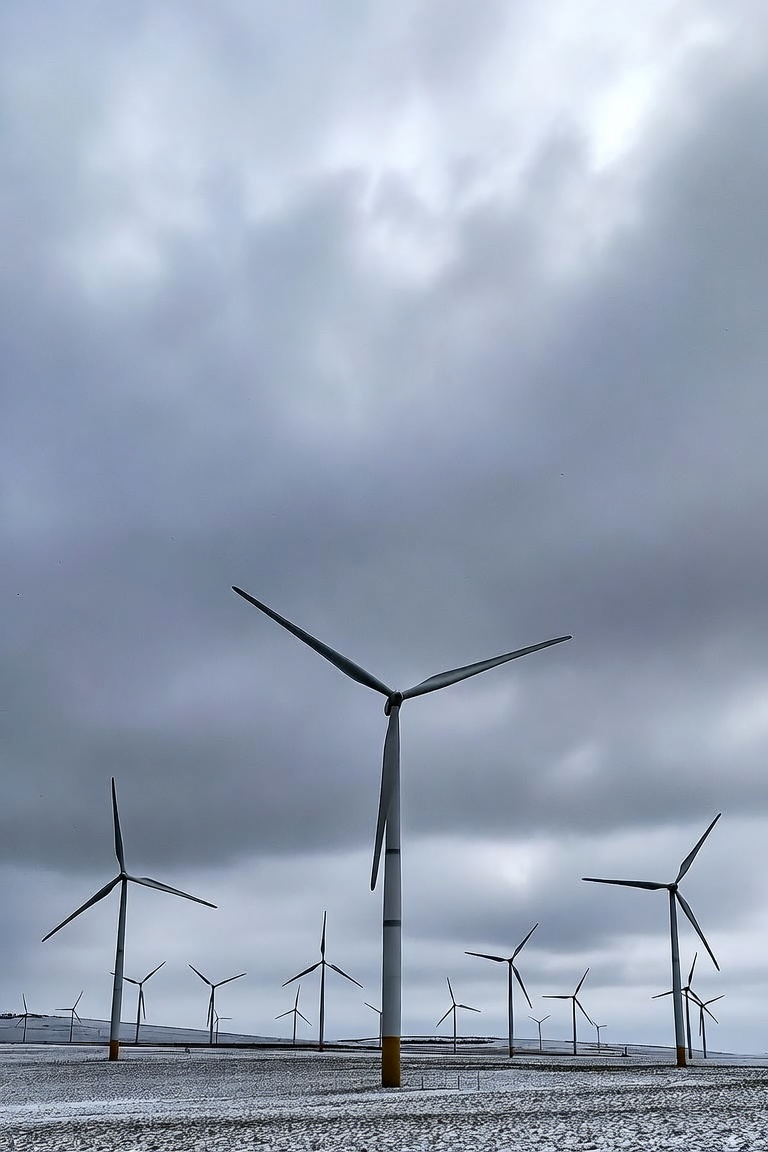
In January, the chancellor of Germany stood before a room of business leaders in the city of Dessau and said what many of them had thought for years. Shutting down the country's nuclear power plants, Friedrich Merz told them, had been a serious strategic mistake. "We simply don't have enough energy generation capacity," he said, and he called Germany's energy transition the most expensive in the world.
It is rare for a head of government to say that about his own country's signature policy. It is rarer still when the policy was carried out by every major party that has governed Germany this century, including his own.
The temptation is to look for someone else to blame. A popular candidate online is the World Economic Forum, the Davos gathering that has spent years championing net-zero targets. It is the wrong suspect. The Forum actively promotes nuclear power and publishes plans for building new reactors faster. Germany's nuclear exit was made at home, by German voters and German politicians, over four decades. That is what makes it instructive.
The decision came in stages. In 2000, a coalition of Social Democrats and Greens, a party born from the anti-nuclear protests of the 1970s, agreed to phase out nuclear power. In 2010, Angela Merkel's conservative government reversed course and extended the plants' lives. Then, in March 2011, an earthquake and tsunami wrecked the Fukushima plant in Japan. Within weeks, Merkel reversed herself again. Eight reactors closed almost immediately, and the rest were given an end date. The last three went dark on April 15, 2023.
Nuclear power had once supplied nearly 30 percent of Germany's electricity. The country planned to replace it with wind and solar, bridged by natural gas, much of it from Russia. Then Russia invaded Ukraine in 2022, and the bridge collapsed.
So what did Germany get?
It did not get blackouts. Its grid regulator says the risk of a major outage remains very low, and the lights have stayed on. Claims circulating this summer that the regulator was preparing secret rationing plans for industry rest on a single report that no one has independently confirmed.
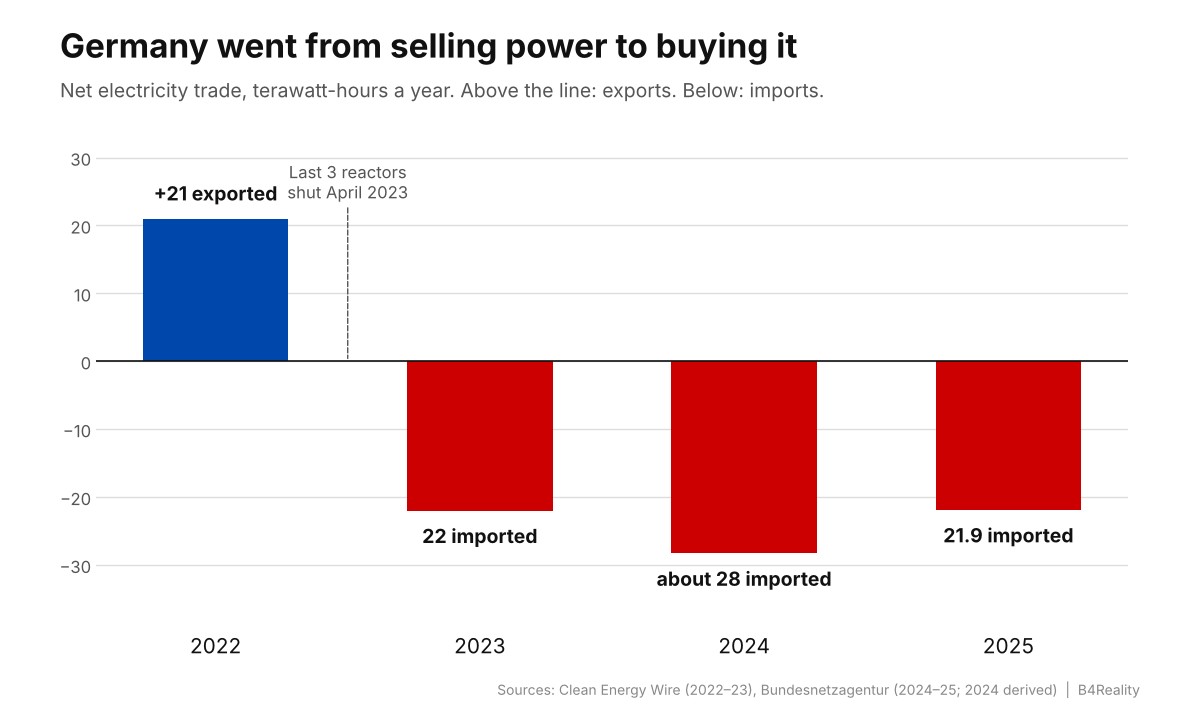
It did get a country that now buys power from abroad. Germany became a net importer of electricity in 2023 and stayed one: last year it imported 76 terawatt-hours and exported 54. The average wholesale price rose 14 percent in 2025, to about 89 euros per megawatt-hour.
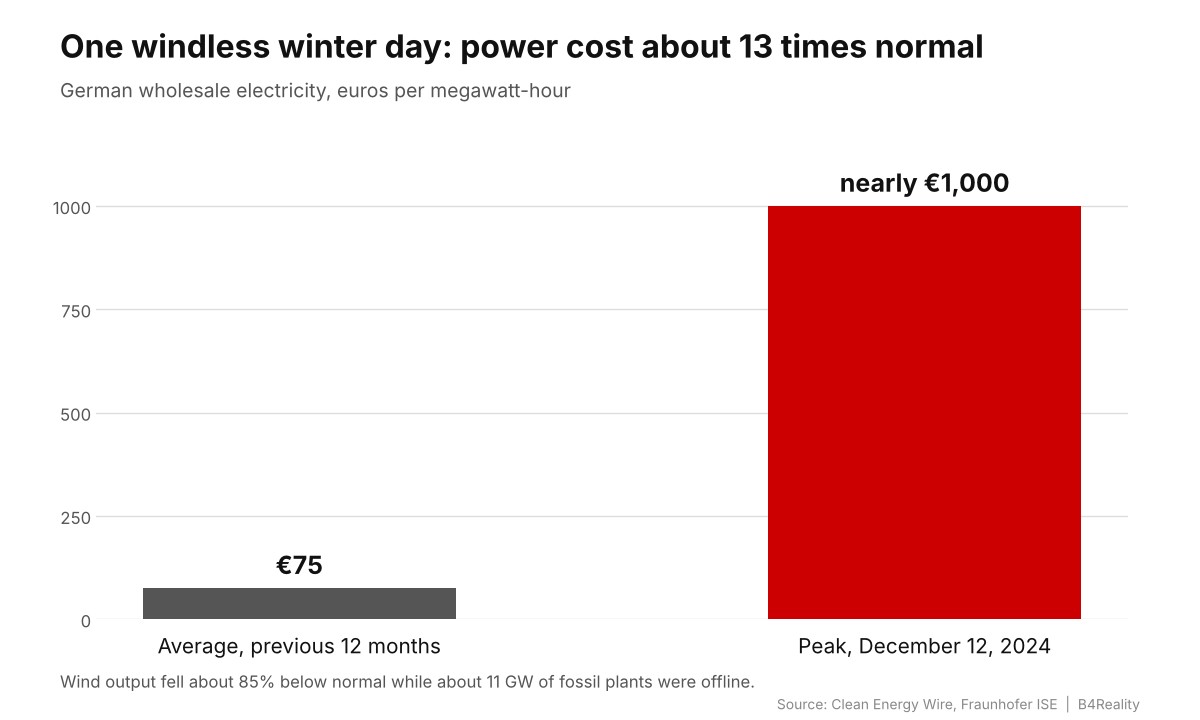
It also got exposure to a word every German now knows. Dunkelflaute means "dark doldrums": cold, still, overcast days when wind turbines stand idle and solar panels produce little. On December 12, 2024, wind output fell about 85 percent below normal while a large share of fossil plants was offline for repairs. Wholesale prices briefly approached 1,000 euros per megawatt-hour, more than ten times the usual level. A steel plant in Saxony simply stopped production rather than pay.
And it got a subsidy bill. This year the government launched a 3.8 billion euro program that roughly halves electricity costs for energy-intensive companies at risk of moving abroad, running through 2028. The chancellor himself has said permanent subsidies of that kind cannot last.
The defenders of the policy have real arguments, and they deserve a fair hearing. Renewables produced nearly 59 percent of German electricity last year, and wind and solar overtook fossil fuels for the first time. In 2023, coal use fell to its lowest level in more than sixty years. Several studies found that the nuclear exit itself raised household bills only slightly. The far larger shock came from the loss of Russian gas, a dependence that every recent German government chose to deepen.
But that defense contains its own indictment. Germany closed its nuclear plants while making itself dependent on Russian gas, and then it lost the gas. It gave up the one large source of electricity that was both reliable in a windless winter and free of carbon emissions, at the very moment it was promising to eliminate both coal and gas.
Can it change its mind? Not easily. The last reactors have been emptied of fuel and partly dismantled, and their operating licenses are gone. Former plant managers have urged the government to try to restart some of them, but estimates of the cost run from hundreds of millions to billions of euros per plant. The chancellor regrets the decision. He has not committed to reversing it.
There is a lesson here for any country, and it is not about a forum in the Swiss mountains. It is that energy policy made in a moment of fear, the fear after Fukushima, can lock a nation into decades of consequences. Germany did not run out of power. It ran out of options, and it did so on its own.

Leave a Comment