
Well, I will give Washington credit for one thing — they never run out of ways to make you shake your head.
The Food and Drug Administration, the same agency that spent years telling us flavored vapes were a special danger to children and teenagers, went ahead and approved fruit-flavored electronic cigarettes in May 2026. Mango. Blueberry. First time ever. And they did it, reportedly, after some encouragement from the White House.
Now I want to be fair here. I am not one of those fellows who thinks the government ought to be telling grown adults what they can put in their own bodies. That is not my argument. A man wants to vape blueberry flavored nicotine on his back porch, that is between him and his doctor and frankly nobody else.
My question is a simpler one: what exactly changed?
For years the FDA said flavored vapes posed a — and I am quoting here — known and substantial risk to youth. That was their phrase. Known and substantial. They denied application after application from vape companies, took the issue all the way to the Supreme Court, and maintained that the public health math simply did not work out in favor of letting fruit-flavored nicotine products sit on store shelves next to the Skittles.
Then the political winds shifted and suddenly the math works out fine.
The justification this time around is something called age-gating technology. The idea is that the vape device itself has technology built in that would prevent a young person from using it. A digital lock, essentially, on a nicotine delivery device.
I want you to sit with that for a moment.
We are talking about teenagers. The same demographic that figured out how to get around parental controls on the family computer before they finished middle school. The same kids who have been buying flavored vapes illegally for years without any particular difficulty. The FDA's plan to keep mango vapes away from them is a app and a software lock.
I am not saying it cannot work. I am saying I have met teenagers.
Here is what I know about how this plays out in the real world. The flavored vapes that were technically illegal have been widely available for years. Walk into the right gas station in most states and you could find them no problem. The law on the books and the product on the shelf were two different realities, and everybody knew it.
Now the law catches up to the shelf — which is fine — but the idea that a firmware update is going to solve the youth access problem that the black market could not solve is the kind of thinking that sounds good in a press release and falls apart the first time a fourteen year old figures out how to spoof the age verification. Which, give it a week.
Look, maybe I am wrong. Maybe the technology works and the kids stay away from the mango vapes and a bunch of adult smokers switch to something less likely to kill them. That would be a fine outcome. I hope for it sincerely.
But when the science did not change, the product did not change, and the only thing that changed was who was sitting in the Oval Office — well, that tells you something about how much of this was ever really about the science.
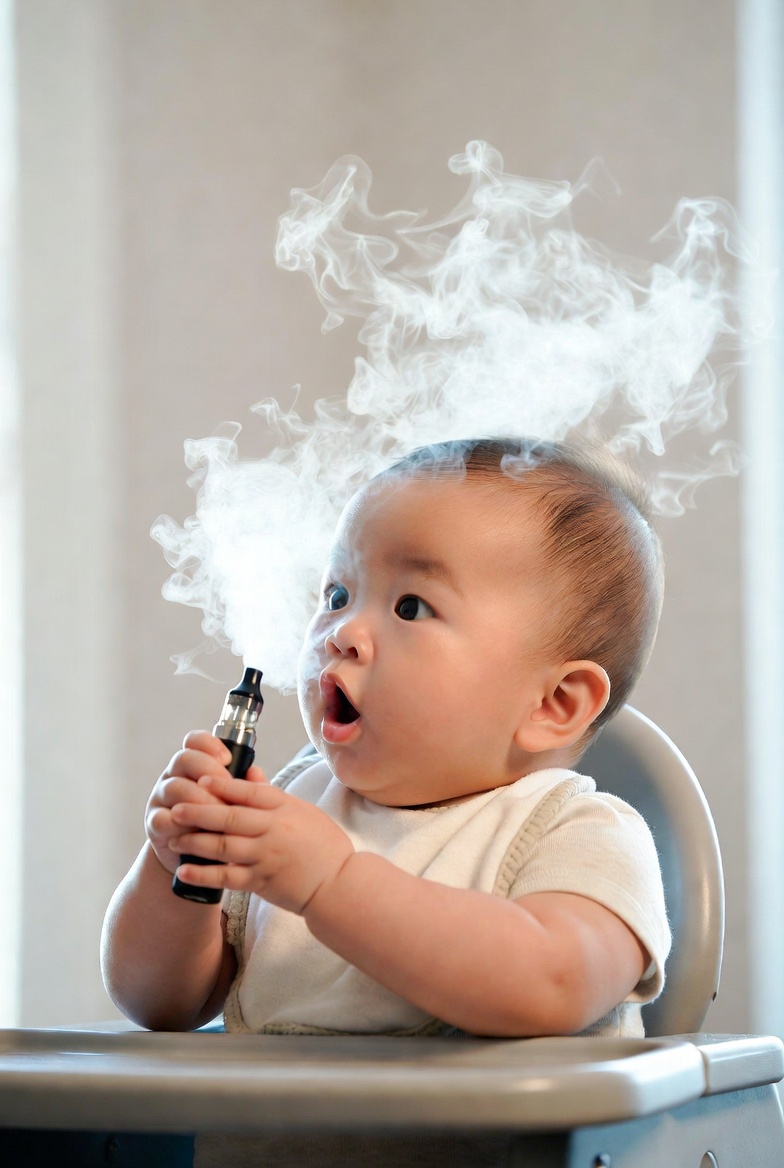
The baby in the picture did not get the memo either way. But at least she looks like she's enjoying herself.

Leave a Comment