
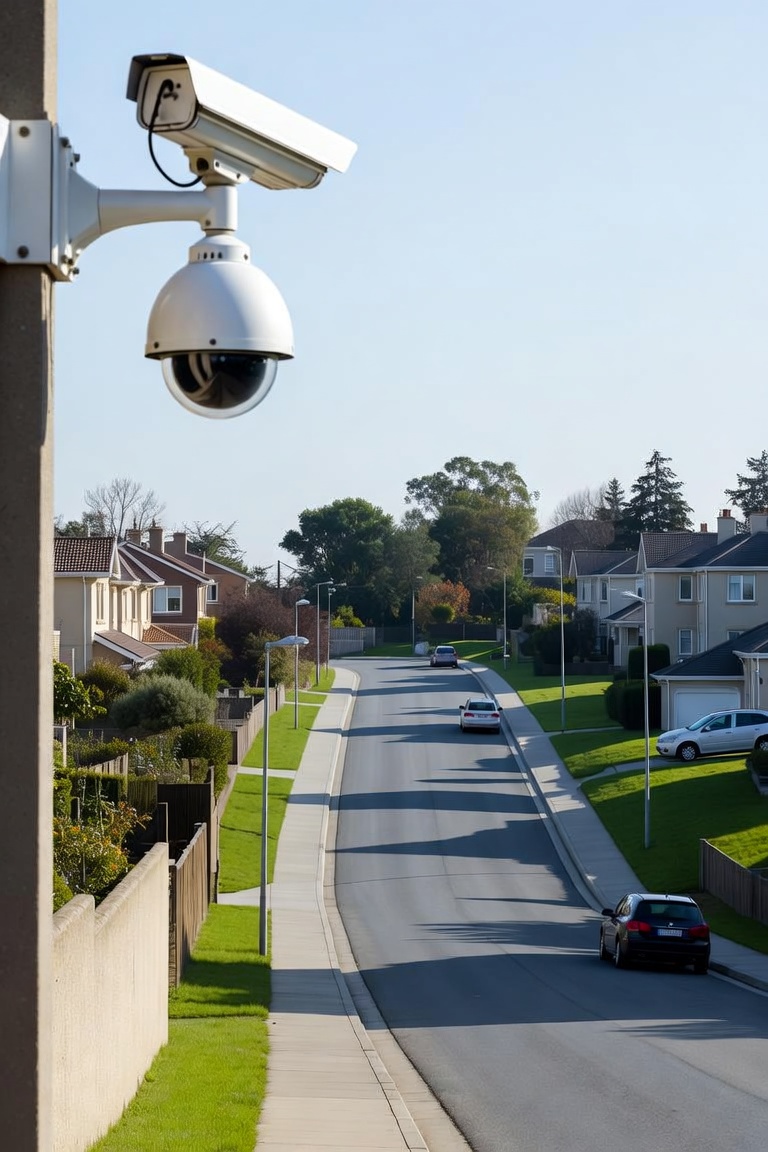
Here is the short answer to the question in the headline: almost nobody. In nearly every American town with Flock license plate cameras, the number of residents who voted on them is zero. The decision was made by a handful of council members, often in a few minutes, or by a police chief spending money that never needed council sign-off at all.
That is how one Atlanta company built a network of more than 120,000 cameras in 49 states. Its CEO says Flock is now in about 7,000 cities and wants to be in all 17,000. Each camera logs every car that passes: plate, make, color, even a bike rack. Police can search that record without a warrant.
Police did not secretly invent this system. But in many places they picked it, pitched it and installed it with little public input. And in a few places they kept going after elected officials said no.
How the cameras actually get approved
There are four common ways a town ends up with Flock cameras. Only one involves elected officials voting in public. None involves residents voting.
Four ways a town gets Flock cameras
Who makes the call, and how many residents get a vote.
The council vote is the one people assume happened. Sometimes it did, and quickly. Clawson, Michigan approved four cameras 4-1 after a short discussion, with a Flock sales manager at the police chief's side. Rockford, Illinois approved $443,998 by 13-1.
The other three routes skip the public budget fight. Auburn, Maine ran seven cameras for a year on a Homeland Security grant. Councilors never approved them, because no property tax money was spent. Fort Wayne, Indiana police spent $25,200 in 2024 and $92,995 in 2025, just under the amount that triggers a council vote. Loganville, Georgia paid $66,500 for ten cameras out of federal asset forfeiture funds, money seized in criminal cases rather than taxes.
Did police decide on their own?
In some towns, yes.
In Chetek, Wisconsin, the police chief put up two cameras in May without telling the mayor or the council. He said he did not need approval from elected officials to buy police equipment. After a heated council meeting, he apologized.
In Troy, New York, a 2021 pilot quietly grew to 26 cameras. The two-year contract is now $156,000, though spending over $35,000 normally needs council approval. The council says it learned about the cameras from protesters. When it cut off payments, the mayor declared a state of emergency to keep paying Flock. The council is now suing the mayor.
In Fort Wayne, the council voted down a $120,000 renewal in August. Police then said they were weighing a contract under $100,000, which would not need council approval. The mayor stepped in, and the city says the cameras are coming down.
In Tom Green County, Texas, commissioners voted 4-1 to strip camera money out of a state grant. The sheriff's office told them it would buy the cameras from its own budget anyway. In Bowie, Texas, a council member said after a 4-2 vote that the police chief had told them he could put cameras up with or without the council.
Sometimes it is not even the police. In Littleton, Massachusetts, the town voted to shut its cameras off, and Flock switched five of them back on without telling anyone. Evanston, Illinois and Cambridge, Massachusetts both caught Flock reinstalling cameras they had not approved. In St. Lucie County, Florida, officials preparing to remove 52 cameras found 14 more they had never authorized. Some of those had no owner anyone could identify.
The first real votes are only now coming
After five years of expansion, a few towns are finally asking residents. League City, Texas put the question on the November 3 ballot, though the council made it advisory, not binding. Ardmore, Oklahoma will hold a special election in February on its 23 cameras. Lake City, Florida's council refused to put the question to voters. Conroe, Texas tabled a proposal to even ask its lawyer whether residents could vote.
What is driving the backlash is misuse, not theory. A Fort Bend County, Texas deputy was suspended for looking up one person's plate 41 times and another's 148 times. A Washington Post investigation found at least 46 officers accused of using Flock to track women they were romantically interested in. Troy police shared their data with Flock's national network until they were caught in March.
Where councils do vote, public comment often runs one way. At a Conroe meeting, not one resident spoke in favor of the cameras. Oklahoma City's council renewed its $270,000 contract 5-3 anyway, to boos from the room.
An advocacy group, Secure Justice, counts 214 cities and counties that have dropped Flock since 2021, 90 of them in August alone. Flock says it is still signing about ten new cities for every one that leaves.
The other side
Police have a real case, and most of these deployments were legal. Conroe police say Flock played a role in 84 of 202 arrests by one crime unit. Stow, Ohio credits the cameras with 22 arrests, three stolen cars recovered and help on five missing-person cases. Lake City's police chief says Flock helped bring down gun violence.
Flock has also made changes. Officers now have to enter a case number for every search. Data is kept for 7 days by default instead of 30, and unusual search patterns get flagged.
But those numbers come from police and the company, and independent checks are rare. And none of them answers the question in the headline. A tool can work and still be installed without the public's say.
What you can do
Find out whether cameras are already on your streets. A volunteer project called DeFlock maps them. File a public records request for your city's Flock contract, how it was paid for, and who the data is shared with. Ask your council one question: does any surveillance purchase, grant-funded or not, require a public vote here? If the answer is no, you can push for a ballot question, the way League City and Ardmore residents did.
Nobody voted for a national tracking network. It was built one town at a time, mostly by people who never had to ask.

Leave a Comment